
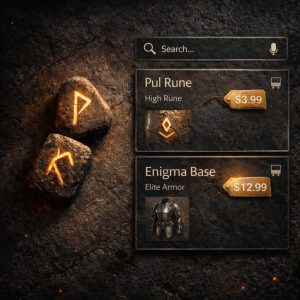
 For a long time, the “D2 conversation” stayed inside the game. People talked about builds, drop rates, ladder starts, and whether a new patch helped or hurt their favorite class. Trading existed, but it lived in chat lobbies, forums, and Discord servers. It was messy, slow, and very human.
That has changed. Today, third-party gaming marketplaces are no longer a side topic. They’re part of how many players think about progression, ladder resets, and even what it means to play “legit.” Whether players support them or not, sites like Yes Gamers now come up in the same conversations as rune words and endgame builds.
D2’s economy isn’t optional. It’s the core loop.
Diablo II has always been different from most action RPGs because its economy matters. Items are more than stat upgrades. They’re milestones, trade currency, and proof of progress. High runes aren’t just crafting materials. They’re units of value.
Every ladder reset restarts that economy from zero. Early scarcity, wild price swings, and constant demand for a small set of key items are baked into the design. Because the game has limited official trading tools, that pressure spills over into the real world. Over time, community trading spaces grew, and from there, full marketplaces were a natural next step.
In short, D2 creates economic demand. The game itself doesn’t fully support it. Something else fills the gap.
Time, not skill, is the fundamental constraint now.
A large part of the current D2 player base is older than it was in the early 2000s. Many players still love the grind, but fewer have endless free hours. Ladder seasons move fast, and RNG doesn’t care how busy your week was.
Marketplaces appeal to players who want control over their time. Instead of farming for dozens of hours hoping for one drop, players can shortcut the process and focus on builds, PvP, or endgame content. Even players who never buy anything feel this shift indirectly. When items are always “available somewhere,” it changes how people think about rarity and progression. The presence of media marketplaces reshapes expectations, not just behavior.
Trading no longer means just player-to-player
Old-school D2 trading was personal. You met someone, negotiated, and hoped neither of you got scammed. That still exists, but it’s no longer the whole picture.
Modern trading includes price tracking, searchable inventories, and instant availability. Some platforms focus on community bartering. Others treat items like products, complete with checkout flows and delivery systems. That shift turns trading into something closer to e-commerce than social interaction.
Once real money enters the equation, scale follows. And when supply operates at scale, it affects the broader in-game economy, even for players who never participate directly.
The legitimacy debate is now part of D2 culture.
Few topics spark more arguments than real-money trading. Some players see it as cheating. Others see it as a personal choice. Many fall somewhere in the middle: they don’t use it, but they understand why others do.
These debates persist because they touch on fairness, botting, and enforcement. Players worry about whether bought items are linked to bots and whether that undermines the ladder race. At the same time, many also believe enforcement is inconsistent and that the market exists regardless of opinion.
As a result, marketplaces aren’t just about items. They’re part of ongoing arguments about what kind of game D2 is supposed to be in its modern form.
The game still hasn’t solved the trading friction.
Another reason marketplaces keep growing is simple: players have asked for better trading tools for years. Not necessarily a packed auction house, but something that reduces friction without killing player interaction.
That hasn’t really happened. Trading is still slow and inconvenient by design. When friction stays high, outside solutions grow stronger. Marketplaces step in to offer speed, clarity, and predictable outcomes. You don’t have to like the result to understand the cause.
Trust and risk now matter more than ever.
Once real money is involved, trust becomes a central issue. Players worry about scams, account safety, and whether sellers are reliable. That’s why marketplaces put so much emphasis on support, delivery guarantees, and reputation.
At the same time, gamers are more aware of grey-market risks than they used to be. Stories about fraud, chargebacks, and questionable sourcing circulate widely. In D2 communities, this shows up as constant advice threads: what’s safe, what isn’t, and what risks aren’t worth taking. This layer of caution is now part of the D2 conversation, too.
Why does YesGamers keep coming up
So why are gaming marketplaces like YesGamers now part of how people talk about Diablo II? Because the game isn’t just about killing monsters anymore, it’s about how players choose to spend their time, how ladder economies evolve, and what the community considers fair play. Marketplaces influence all of that.
- They affect how scarcity feels at the start of the ladder.
- They turn real-world time into a planning factor for builds.
- They fuel debates about botting and legitimacy.
- And they exist because trading friction never went away.
You don’t have to support real-money trading to acknowledge its impact. When players talk about the state of D2 today, they’re not just talking about patches and drop rates. They’re talking about the game’s ecosystem. That includes marketplaces that promise faster paths to the same endgame.
That’s why names like YesGamers keep showing up in D2 discussions, whether as recommendations, warnings, or examples in yet another argument about what Diablo II should be in 2026.
