
A lot of us lived for an art course. This gave us an opportunity to become pint-sized Picassos with paint Michelangelos with elbow macaroni. We did not let our egos or even skillsets get whatsoever. Rather we rolled our sleeves up, silenced our imagination, and brimming with pride once we introduced our”masterpieces” to family members. We’re happy to create items for the special folks in our own lives then. During our crafts and arts, we can show them how much they meant for us within our own distinct ways.
At a time once we can not see family and friends as far as we had to, a few may be fighting to get the proper methods to remain linked — and reveal our VIPs they mean the world into people. Sure, the movie chats, virtual dancing parties, and match nights have been fun in the beginning. However, with the heaviness of the past couple of months, high-tech communicating solutions have begun to lose their sheen.
Just just how do we reconnect with our nearest and dearest in real ways, nourish our own heads and raise our souls, particularly with the holidays quickly approaching? It is all rooted in the artwork.
Art therapy director, Tammy Shella, Ph.D., ATR-BC, will help us know how important artwork is to pressure control and how we could use it in order to stay attached to those we adore. It is also a good time to learn the art with paint by numbers for adults.
The way the pandemic has influenced our psychological wellbeing
According to the CDC, the pandemic has become the origin of several mental health issues. Most happen to be associated with death and illness resulting from the illness, bodily distancing, and even orders that are senile. A recent poll done by the CDC demonstrated that instances of stress disorder and depressive disease have grown substantially between April and June in the USA. Of people who participated in this poll, 40.9 percent reported at least one behavioral or mental health state — depression, anxiety, trauma-and stressor-related disease, or perhaps increased substance misuse. Some survey participants reported they considered suicide at the 30-day interval until they listed their answers.
After experiencing this much reduction, it is not tough to get stuck in a loop of despair and grief. Additionally, it is clear if you are feeling lonelier than normal or have a much greater desire to stay isolated. But, keeping personal connections is 1 thing which we may control. And if all hope is lost, the people we love will help us recall that great things still exist on the planet.
How artwork will help during tough times
As an art therapist, Tammy Shella has noticed how imagination can ease tension and help individuals process the heaviness they’re handling. Though your stick characters or crocheted toilet paper covers will not win you any awards, even making them are able to greatly boost your inner artist and also assist you in finding peace of mind.
“All of us draw. It is a pure form of expression, also distributing ourselves distinctively is the human character. From time to time, it’s difficult for all of us to say things since the side of the mind and the visual aspect of the mind are two distinct paths. By way of instance, post-traumatic pressure is saved at the nonverbal regions of our mind. That’s the reason why individuals who have PTSD are actuated with items such as landscapes, scents, colors, or sounds that remind them of their injury that happened. In their situation, discussing the event will not necessarily bring up the injury. So due to this, just speaking about things will not always help them cure,” states Shella.
Shella adds that art treatment helps patients procedure what they may be unable to through conventional treatment sessions.
“Walter Reed National Military Medical Center has a significant art treatment program for soldiers who have PTSD since it helps them communicate that which they can not communicate through words. When you consider it, individuals who have experienced significant traumas can not explain what they are going through. And once we have a challenging time expressing what we are going through, we’ve got feelings of pity, anger, and melancholy all wrapped up indoors. We may also mask our feelings to seem strong to people around us. However, during art treatment, patients may communicate the way they feel about the inside and show things they were not comfortable discussing with the world.”
While the app which Shella handles is mostly for hospital patients, she states that we are able to considerably benefit from making art in your home. And also a fantastic reason to do it at this time? It may give us a brand new psychological break from present events and let us be mindful.
Art along with also the “flow state”
“When you are creating artwork, while it’s writing in a diary, singing or creating a card, then you are getting into what is known as a ‘flow condition’ Psychologist Mihaly Csikszentmihalyi, one of the cofounders of psychology explains flow condition for a span of optimum attention. At this moment, you are in the zone and entirely focused on the job at hand. You are not concerned about the moment, bodily senses, or some additional needs. And working on your own invention can be very euphoric,” states Shella.
She states that the flow condition is a fantastic spot to be. When we go there we could stimulate our thoughts, adopt mindfulness, and encounter feelings of achievement or command.
ALSO READ: How COVID-19 Affected Brazilian Jiujitsu
Why we ought to make art for many others
One more advantage of tapping in our imagination is that we’re able to use it in order to think of new approaches to associate with the men and women that are significant to people.
“Communication has come to be so simple. We could text. We can only pick up the telephone and call folks. We can find a hold of somebody throughout the nation or even FaceTime them instantly. The fantastic thing about creating cards or composing letters is you could express yourself in a way that you wouldn’t always state yourself face-to-face. By way of instance, telling a person that you adore them may occasionally be hard to do. However, it may be much a lot simpler to write it into a letter or even a card. It is possible to express your emotions and you do not need to be concerned about some awkwardness following the receiver reads it,” clarifies Shella.
Creating artwork can be a selfless act
“It turns into altruistic action. Though you’re not planning to acquire the benefit of seeing that the individual gets the letter or card, you realize the receiver will feel great when they start it. It tells them that somebody was considering them. This makes them feel as they’re cared for. And understanding this makes us feel great, also. As soon as you’re able to think out of yourself, it frees up you and broadens your outlook.”
You do not want expensive supplies — along with your artwork does not need to be ideal
With the holidays coming, writing letters or creating your own cards are all fantastic ways to associate with the specific folks in your own lifetime. If you are not actually a wordsmith, Shella claims to discover a craft that you truly enjoy and move from that point.
“There is no wrong way to do it. Someone will appreciate your final piece since you left it to them. The ability level does not matter. It is the idea that counts. Another great thing is there are countless websites that will help you through the procedure which still counts as generating. Experiment and recall every celebrity has failures. Artists throw off or leave a great deal of pieces since they did not like the way a bit was moving in. Attempt again and maintain building your abilities. That is what art is about.”
As you are getting started, do not rush out into the art supply shop and drop a ton of money on pencils, paint, or anything else you want. Shella states you’ll get creative with items around the home or get supplies in the dollar shop. As an example, you may make collages with older magazines or papers. Or you may purchase canvases along with other items in the dollar store and send images you have painted. You may even select or purchase flowers and also make arrangements to drop away to loved ones.
Shella suggests maybe not overthinking things in regards to creating artwork for many others. And if you do not need to choose on painting drawing or writing, there is still a great deal of sentimental significance of sending a bouquet out of a flower store or even a store-bought card. It shows someone they’re in the mind.
“When it is possible to start up and look out of yourself, you understand things aren’t solely around you. You begin to understand what we are going through is a common experience — and understanding that other men and women know what you are feeling helps us feel better.”



 As the US government continues to sanction China over different economic aspects, House Reps. are about to pass a House Bill that could see
  Being a China-based entity, TikTok owner ByteDance is under the regulatory control of Chinese authorities, which gives the latter the power to demand access to all data belonging to about 150 million US citizens stored in the social media platform. That being the situation, there is alway the possibility that through TikTok, Chinese authorities can get hold of critical information that CCP can use in launching political offensives against the US.


 A new audio tool powered by Artificial Intelligence (AI) and called AudioCraft was recently released by
 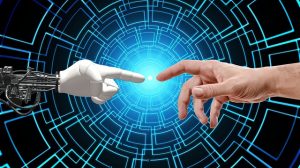 AudioGen – is a textually guided model, trained to create text-to-environmental and public-sound effects, such as birds chirping, river flowing, wind blowing, footsteps running, dogs barking or cars honking.


 Bankruptcy is a complicated legal process which can have an immense influence on a business’ future. Although these proceedings normally take place in court,
  Fox News had spread and amplified
  Fox News aired and promoted the false news to avoid losing Trump supporters who have been defecting to rival conservative channels One America News and Newsmax. Still, these same channels also face defamation charges filed by Dominion and another voting machine company Smartmatic.
 With the advancement of technology and innovation, the future looks promising for the towing industry.
 Tow Truck In San Jose – Fast Tow Service


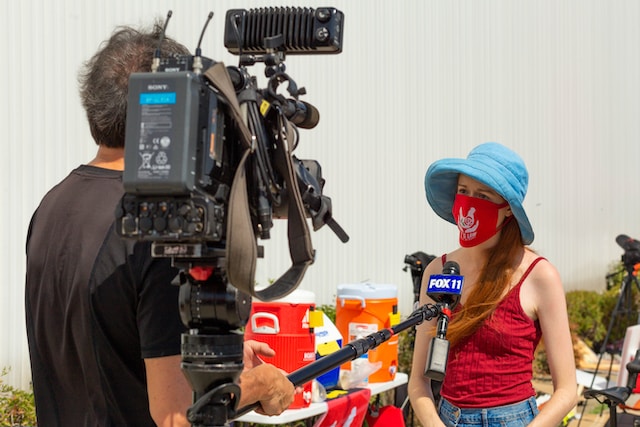

 Outsourcing has become a popular business strategy in recent years, with companies looking to cut costs and increase efficiency. One area that has seen a surge in outsourcing is virtual assistant services. A virtual assistant (VA) is a remote worker who provides administrative, technical, or creative assistance to clients from a remote location. Hiring a virtual assistant has become increasingly popular as it offers many benefits for businesses, including cost savings, increased productivity, and access to a wider talent pool.

 We are living in a world that is constantly changing, with new inventions coming out every day. Media is one of those inventions that have changed the way we learn and interact with one another. Media is everywhere, from TV’s to cell phones, and it has become an important part of our everyday lives. In fact, some people would say that media has become more important than ever before because it provides us with information and entertainment at our fingertips. With all the media options available today, it’s hard to know where to start when trying to figure out which ones should be used in schools for educational purposes—television? newspapers? video games? The answer really depends on your goals for using media in your classroom as well as what type of student you are working with
 Making Sense of Dreams
  Today, a lot of printed works and websites provide guides as well as services in dream interpretation. For instance, تفسير حلم by practiced interpreters of Earaaf are guided by the ancient spiritual teachings learned from their ancestors alongside contemporary sciences which they too have carefully studied. That way, the تفسير حلم provided by them aren’t simply interpretations, but uncovered knowledge bearing meaning or truth specific to the person who had the dream.
 According to Sigmund Freud’s theory, dreams embody the unseen fulfillment of our unwitting desires or wishes. To him, dreaming is an activity of the brain conforming to its own rationality. By determining the workings of dreams, he also found and shared new insights on the mechanisms of the unconscious as well as its commanding role in the life of people.


 Social Media SEO – What Is It?
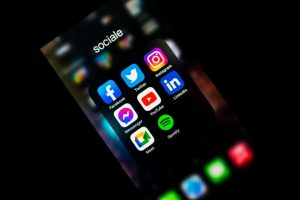 Social Media SEO Tips

 What is the trend today? A lot actually. To the point that it cannot be out numbered since its produce is not just one per hour hour. Nowadays, trends are created in just a minute and everyone can possibly create one. How? Through the